
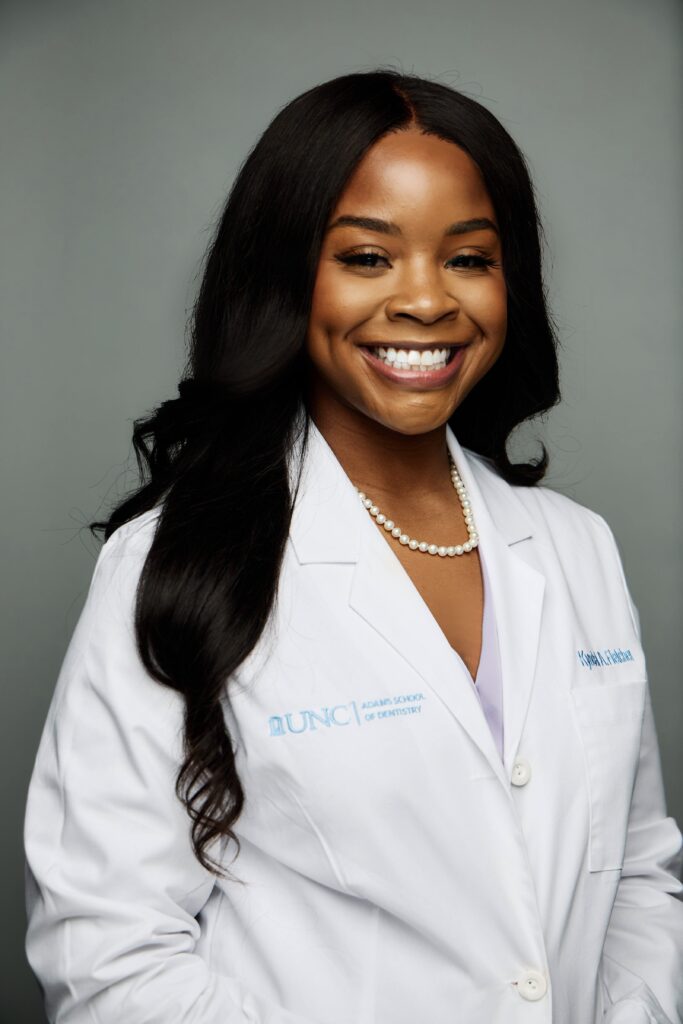
April 3, 2026. By Kyndal Fletcher.
Let’s be honest: dentures have never been the “cool kid” of dentistry. Crowns and veneers get
the spotlight. Implants get fancy conferences and glossy Instagram reels. Dentures? They’ve
always been the practical shoes of prosthodontics: reliable, necessary, but rarely exciting.
But something wild is happening. Dentures are having a glow-up. A digital one.
Walk into a modern lab and it looks less like the plaster-dust spaces you saw in the sim lab and
more like a sci-fi workshop: printers humming, resin curing, PMMA blocks being carved with the
precision of a jeweler cutting diamonds. And sitting in the middle of it all? Complete dentures
being made to look sleek, milled, custom, and honestly kind of beautiful.
Digital dentures aren’t just new toys; they’re a full reimagining of the process. Imagine telling a
patient you can make them a set of teeth in fewer visits, without subjecting them to the
multi-appointment obstacle course that complete dentures used to be. Conventional dentures
can take 5–6 appointments, multiple adjustments, and weeks of lab time. Digital workflows?
Often 2–3 visits with fewer post-insertion adjustments and if something breaks or is lost, you
don’t start over, you reopen the file. Imagine making a virtual try-in so aesthetic tweaks happen
digitally instead of remelting wax at 9 p.m. the night before clinic.
Even in dental school, I’ve seen how challenging conventional denture workflows can be for
patients with multiple appointments, sore spots, remakes, and long turnaround times. It makes
you realize how much of this process is built around limitations we’ve simply accepted. That’s
why digital dentures are so exciting since they challenge that norm.
Through the NC Schweitzer Fellowship, my partner, Richard Baddoo, and I are working to
bring digital dentistry to the SNDA CAARE Clinic, expanding access for edentulous patients
without dental insurance. Since we see patients only once a week, efficiency isn’t just helpful,it’s
critical. Digital workflows allow us to streamline care, reduce unnecessary visits, and make
treatment more realistic for patients who already face significant barriers to access.
And here’s the twist: the people best positioned to champion this shift are dental students!
We’re the ones who grew up on smartphones and 3D printers. If anyone is ready to take
dentures into their digital renaissance, it’s the generation who learned to type before we learned
Cursive. But first we need access.Many curriculums still treat digital dentures like an elective
instead of the direction prosthodontics is barreling toward. We get one demo, maybe two, and
that’s supposed to prepare us for a system labs and DSOs are using every day. It’s not enough.
So here’s the challenge:
What if we rewrote the narrative?
What if dental students became the ones who helped faculty pilot new workflows, who pushed
for scanner access in removable clinic, who partnered with labs to bring digital try-ins to
Campus?
Digital dentures aren’t just a workflow, they’re a movement. A chance to bring dignity, precision,
and artistry to one of the most historically underserved branches of dentistry. A chance to give
edentulous patients something they’ve been denied for years: speed, comfort, and real
customization.
Kyndal Fletcher
2025-26 BCBSNC Schweitzer Fellow
UNC Adams School of Dentistry Class of 2027
The opinions expressed are the author’s own.